


Ōhineangaanga Stream remediation works
The Ōhineangaanga Stream experienced significant erosion during the January 2023 Auckland Anniversary Weekend weather event.
Both the stream banks and bed were damaged between the Bayly Place footbridge and about 150 metres downstream of the Station Road Bridge.
The streambed in this area is relatively steep, and further erosion could affect the bank stability and the foundations of nearby bridges and other infrastructure. The remediation project will address this erosion and improve the stream’s long-term resilience, helping reduce the risk of further damage during significant weather events.
What infrastructure will the work help protect?
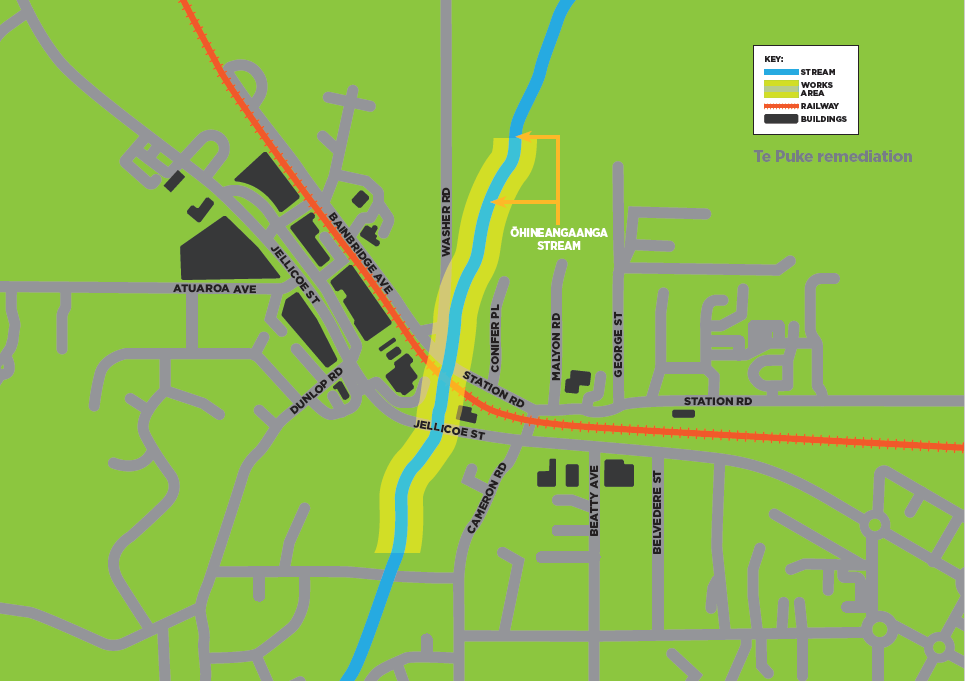
The project will help protect important infrastructure around the stream, including the Jellicoe Street Bridge, Donovan Park footbridge, KiwiRail bridge and Washer Road Bridge. Water and wastewater infrastructure also crosses the stream at Washer Road Bridge. Further erosion could undermine the foundations of these structures and affect their long-term stability. The remediation work is designed to reduce this risk and improve protection for existing infrastructure and adjoining properties.
What work is being carried out?
The project will strengthen the stream banks and bed along approximately 370 metres of the Ōhineangaanga Stream, from upstream of the Donovan Park footbridge to downstream of the Station Road Bridge. The work will combine engineered erosion protection with natural features. This includes rock protection, sheet piling where required, protection around bridge structures, and features designed to help control erosion and stabilise the stream. Planting and in-stream habitat features will also form part of the project. The design has been informed by geotechnical investigations, ecological assessments and studies of how the stream behaves.
Why is the project using engineering and natural solutions?
A combination of engineered protection and natural features will help provide a more resilient long-term outcome. Engineered measures are needed in some areas to withstand the force of flowing water and protect important infrastructure. In other areas, appropriately shaped banks, planting and in-stream features can help stabilise the stream while supporting its natural environment. This integrated approach aims to protect people, properties and infrastructure while also enhancing the stream’s ecological health.
Will the work improve the stream environment?
Yes. Alongside reducing erosion, the project aims to enhance the stream’s ecological and visual character. Planting and in-stream habitat features will help create a more natural stream environment and support aquatic life. The design has considered ecological values alongside the engineering requirements. The aim is to leave the stream more stable and resilient, with improved habitat and environmental values.
How will fish passage be maintained?
Normal stream flows and fish passage will be maintained during the works. A qualified ecologist will safely relocate fish from areas before construction work takes place. The completed works will also incorporate in-stream features intended to support aquatic habitat and fish passage.
Who is funding the project?
The project has an estimated cost of $3.3 million. Central government is contributing 60% through Kānoa – Regional Economic Development & Investment Unit, with the remainder funded by Bay of Plenty Regional Council. This investment will help address the erosion damage caused by the 2023 weather event, improve the resilience of important infrastructure and enhance the stream environment for the future.