
 Possums
Common name: Possum
Botanical name: Trichosurus vulpecula
Management programme: Advisory
Where are they originally from?
- Introduced from Australia in 1837 to establish a fur industry.
- First populations introduced into New Zealand did not survive, confirmed established in Southland in 1858.
Why are they a pest?
Possums are an economic and environmental threat to New Zealand. They destroy native and exotic trees through browsing, predate on native birds and invertebrates, and carry and spread diseases, such as Bovine Tb.
Where are they found?
- Live in a wide variety of habitat, found in all types of habitat including indigenous forest from sea level to treeline, in scrublands, grasslands, exotic forest, shelter belts, orchards and cropping areas, thermal areas, swamps, sand dunes and urban and city areas.
- Prefer forest margin habitat, particularly in mixed hardwood forests.
- Spread widely across New Zealand.
What do they look like?
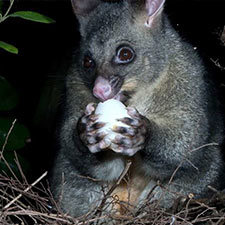
- A four legged furry mammal that generally weighs between 2-5 kilograms.
- It has a thick, bushy tail, thick body fur, a pointed snout and large, pointed ears.
- Two colour forms, grey and black, with many variations in appearance.
What are the rules?
Advisory
Council does not enforce the control of advisory species. It is landowner/occupier responsibility to manage these pests. Council may provide advice on how to manage or control advisory species if required.
How do you get rid of them?
- Shooting
- Trapping
- Poisoning
CAUTION: When using pesticide please READ THE LABEL thoroughly to ensure that all instructions and safety requirements are followed. All firearms laws MUST be adhered to when using a firearm. When using traps please ensure that all instructions, safety requirements and laws (in particular the Animal Welfare Act 1999) are followed.
NAWAC (National Animal Welfare Advisory Committee) approved kill traps need to be set as per the manufacturers guidelines.
Guidelines on trap use https://www.mpi.govt.nz/animals/animal-welfare/animal-welfare-and-pest-management/traps-and-devices/
DISCLAIMER: Information in this fact sheet regarding pesticides does not necessarily appear on the labels of the products concerned. Bay of Plenty Regional Council does not accept liability for any damage that may arise from the use of pesticides at non-standard rates. Mention of product trade names implies neither endorsement of those products nor criticism of similar products not mentioned. Bay of Plenty Regional Council does not accept liability for any damage or injury that may arise from the use of traps, toxins and firearms.
Read more on pest control guidelines and regulations
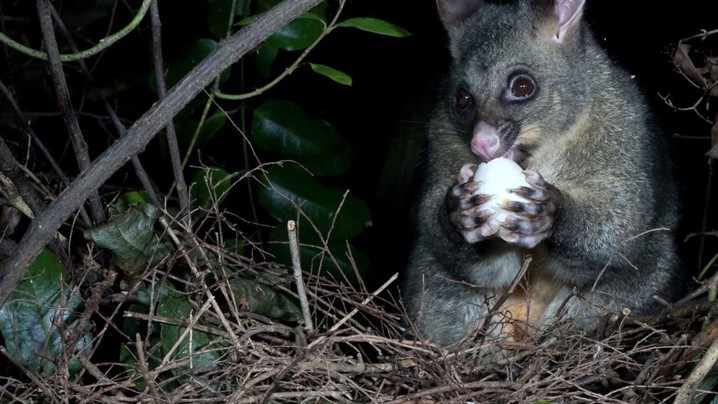
Image credit: DOC